---
title: "Peruvian Grapes: Producing More, Producing Differently"
description: Peru continues to increase its table grape exports, but the story is no longer just about growth. New varieties, markets, and logistics routes are redefining the industry.
image: https://blog.loadsfoods.com/hubfs/portada-blog-uva-peruana-en.jpg
---
[](https://blog.loadsfoods.com/?hsLang=en)
[Contact us](https://dg6ru.share.hsforms.com/23sx48L9PQKC-2T_nDP-x2g)
Commerce
# Peruvian Grapes: Producing More, Producing Differently
Peru continues to increase its table grape exports, but the story is no longer just about growth. New varieties, markets, and logistics routes are redefining the industry.
[Sebastián Chávez de la Fuente](https://blog.loadsfoods.com/en/author/sebastián-chavez-de-la-fuente)
Oct 8, 2026
---
### Peru is no longer competing on volume alone
Over the past decade, Peru has gone from being an emerging supplier to becoming one of the key players in the global table grape market.
Its advantage is not only about how much it produces. The combination of new varieties, different harvest windows, expanding acreage, and access to international markets has allowed the country to build an increasingly sophisticated supply.
And the numbers show that expansion is continuing.
According to Provid, the Peruvian Table Grape Producers Association, the 2024/2025 season closed with 83.01 million 8.2 kg boxes, a 32% increase compared with the previous season. For the 2025/2026 season, volume increased again to 86.4 million boxes, approximately 4% more than the previous year.
But one figure helps put this growth into perspective: while volume increased by 4% in the 2025/2026 season, export value grew by around 1%, reaching US$2.072 billion FOB, according to Provid.
The industry is growing, yes. But growth in tonnage no longer tells the whole story.
From Red Globe to Sweet Globe: the varietal shift
Perhaps the most visible transformation in Peruvian grapes is happening inside the boxes.
The country has accelerated its transition from traditional varieties to new licensed grapes, particularly those offering characteristics sought by consumers and retailers: good size, crispness, flavor, color, and post-harvest condition.
According to Provid, licensed varieties accounted for approximately 87% of Peruvian table grape exports during the 2025/2026 season.
Among them, Sweet Globe and Autumn Crisp are some of the leading varieties, while Allison has also gained ground.
The shift is particularly significant when compared with the position Red Globe held a decade ago. According to Provid, this variety once represented around 48% of certified acreage and nearly 75% of Peruvian exports. Today, it accounts for approximately 10% of certified acreage.
The varietal transformation is not simply a producer decision. It also reflects changing market demand.
For an importer, buying “Peruvian grapes” is no longer enough. It means defining a specific combination of variety, size, condition, arrival week, and destination market.
The variety has become a central part of commercial strategy.
### More acreage, but also greater concentration
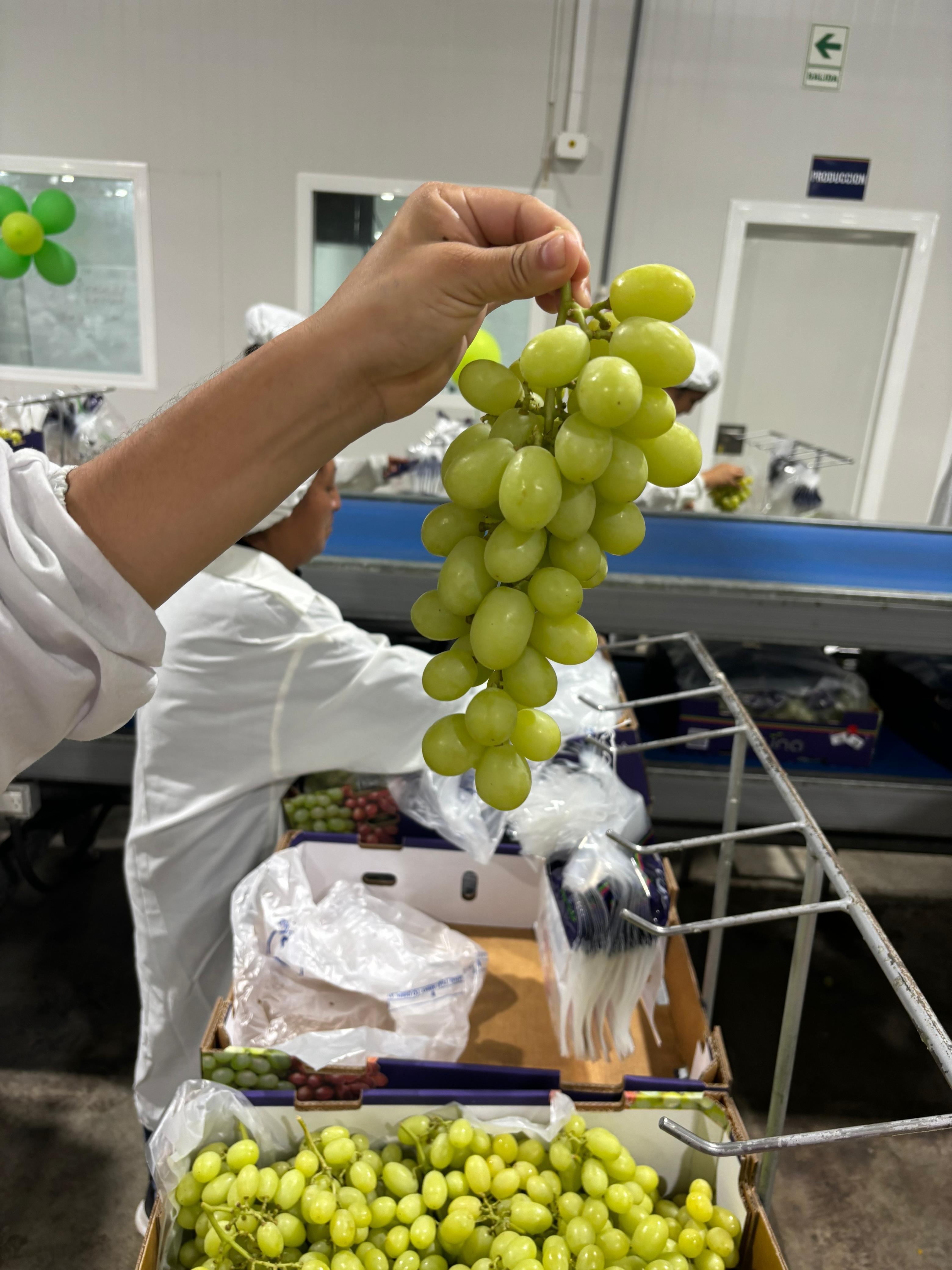
Production continues to expand: according to Provid, Peru reached 23,748 hectares certified for export during the 2025/2026 season, compared with 23,320 hectares the previous season.
Ica remains the main production hub, accounting for approximately 49% of certified acreage, followed by Piura with 34%. Lambayeque and La Libertad account for much of the remaining area.
Geography also explains part of Peru’s competitive advantage.
Piura allows producers to work with early harvest windows and plays an important role at the beginning of the season. Ica, on the other hand, concentrates a large share of the volume and has a highly developed export industry.
This means Peru does not depend on a single production area or commercial window.
For international buyers, this diversity can be highly relevant: it allows them to build supply programs that combine different regions, varieties, and points in the season.
The 2025/2026 season also had to contend with the El Niño phenomenon, a factor that has historically challenged Peruvian agriculture due to its impact on temperatures and rainfall along the coast. Even so, production continued to grow. The industry’s accumulated experience in crop management, together with the diversity of regions, varieties, and harvest windows, has given it an adaptability that is now part of its strength.
### The United States remains the key market
The growth in Peruvian supply has been accompanied by international expansion, although the industry continues to have a strong geographic concentration.
According to SENASA and MIDAGRI, during the 2024/2025 season Peru exported 562,093 tons to 44 international markets. The United States accounted for approximately 46% of shipments, while Europe represented 24% and Mexico 8%.
In the 2025/2026 season, concentration increased: according to Provid, the United States received 52% of shipments, Europe 22%, Latin America 16%, and Asia 6%.
Peru has diversified its destinations, but the United States remains the industry’s leading market by a considerable margin.
The tariff environment also plays a role in this market. Tariffs applied by the United States to imported products add uncertainty to the supply chain because they affect cost structures and competitiveness compared with other origins. Even so, demand for Peruvian grapes remains strong and their share of shipments increased, highlighting the importance of origin during specific seasonal windows.
At the same time, Latin America and Asia represent markets where there is still room to develop further demand.
### Chancay changes the logistics conversation
If varieties are changing the supply side, infrastructure can change the way that supply reaches the market.
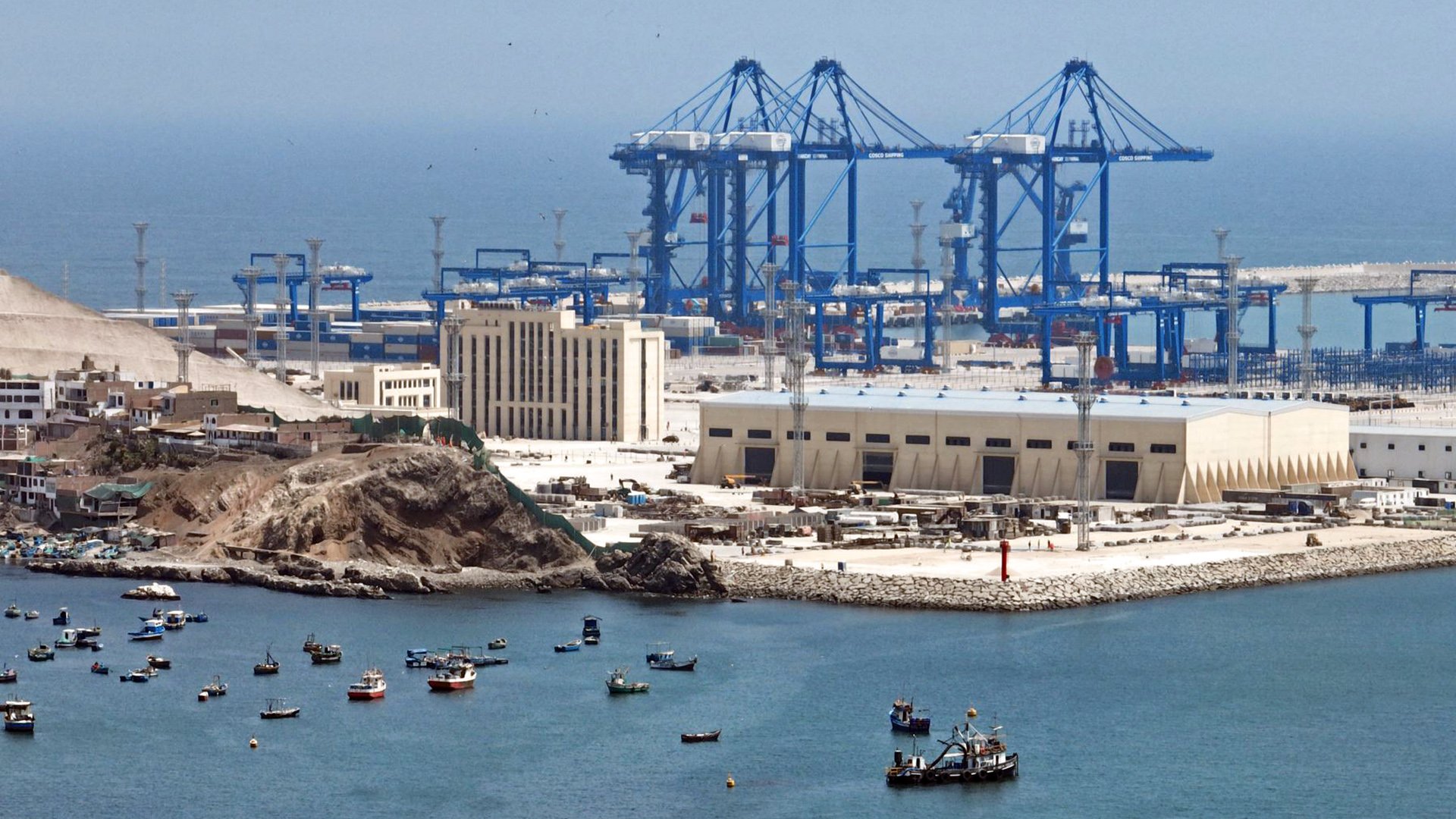
The opening of the Port of Chancay created a new alternative for trade between Peru and Asia.
According to Mincetur, between January and September 2025, the port handled 62% of Peru’s agricultural exports to China. Key products included blueberries, avocados, grapes, and mandarins.
The main attraction is transit time.
According to information from Peru’s Ministry of Economy and Finance, the route between Chancay and Shanghai can reduce travel time by 10 to 12 days compared with previous routes.
For fresh fruit, that difference is significant.
Fewer days in transit can mean more options for planning commercial programs, greater flexibility for certain markets, and potentially better arrival condition.
The ultimate impact, however, will depend on how frequencies, available services, costs, and fruit performance across different routes evolve.
### 
### The challenge is no longer just producing more
The figures from recent seasons show an industry that continues to grow. But they also show that volume growth does not necessarily translate into equivalent growth in value.
In 2025/2026, for example, exports increased by approximately 4% in volume, while FOB value grew by around 1%, according to Provid.
This shifts the focus to a different question: how can more value be captured from each exported box? The answer involves several factors.
Variety is one of them. Quality and arrival condition are another. Destination market, timing within the season, logistics costs, and the ability to anticipate changes in supply also matter.
In a market where Peru, Chile, South Africa, and other origins may overlap during certain periods, timing is becoming increasingly important.
### What can we expect from the coming seasons?
Everything points to the industry continuing to evolve in four directions.
**More licensed varieties:** The varietal transition still has room to continue, particularly in new plantings and acreage coming into production.
**Greater market-based planning:** The concentration in the United States will remain relevant, although the tariff environment and climate make it increasingly important to distribute supply more effectively. Growth in Latin America and Asia opens opportunities in this direction.
**Greater importance of logistics:** Chancay adds a new alternative for Asia and could gradually reshape certain trade routes, especially if services and frequencies continue to develop.
**Greater pressure on efficiency:** With supply increasing, producing more does not necessarily mean capturing more value. Coordination between farming, packing, logistics, and commercialization will become increasingly important.
### What this means for importers
For an importer, the evolution of Peru’s grape industry means more alternatives, but also more variables to manage.
It is no longer simply about finding a Peruvian grape supplier.
It is about defining which variety, which origin, which week, which volume, and which market.
The ability to combine different production regions, varietal programs, and logistics alternatives can become an important tool for maintaining supply continuity and adapting to the conditions of each season.
And perhaps that is the main conclusion from recent seasons: Peru is producing more, but it is also producing differently.
The industry is moving from a strategy focused on increasing volume toward one where variety, quality, timing, and logistics carry increasing weight.
### Import grapes from Peru with Loads
At Loads, we do more than connect you with Peruvian grapes. We manage your entire import process, from sourcing to logistics, operations, and customs.
You also get access to our platform to review documents, live-track your shipments, and check the status of your orders.
Have a question? [Demetra](https://content.loadsfoods.com/demetra-agent?hsLang=en), our 24/7 WhatsApp agent, helps you with shipping documents, approvals, orders, claims, and inquiries without relying on office hours.
[Download our Peru grape catalog](https://content.loadsfoods.com/catalog-2026-table-grapes-from-peru?hsLang=en) and explore our offering.
[](https://blog.loadsfoods.com/hs/cta/wi/redirect?encryptedPayload=AVxigLISyDpMUXvKt28UL%2F3VlGdNMcN78H%2ByNnWars5y7U9RX4vUgsL2h0k3B8I5sp%2BIxUocat7YxXNkzEABeVWYPAmyxF6lZAUCxwjzQjcDTQk1ZvhynaxrTy9pIG0Jy2WUaSZmxjAMyG5g0I8pjOe7C02HWojrsFy9FF181WZ6mNlcIdLsOdhfDX8t2P8kIcgjazUNDsi516c4uzJqEz6fSncBFzGWQQZV9Y0Kd9qAa2qJNl5xaS92lKoV&webInteractiveContentId=223951244186&portalId=22590282&hsLang=en)
[Commerce](https://blog.loadsfoods.com/en/tag/commerce)
## Compartir artículo
  


We are a startup focused on the global food market. With the goal of contributing to food security, we want to provide half a million tons by 2030 in a more sustainable, transparent, and accessible way.
Go to Loads.cl
Copyright 2023 LOADS, All rights reserved.
[Privacy policy](https://www.loads.cl/privacy-policy)
```json
{
"@context" : "https://schema.org",
"@type" : "BlogPosting",
"author" : {
"@type" : "Person",
"name" : "Sebastián Chávez de la Fuente",
"url" : "https://blog.loadsfoods.com/en/author/sebastián-chavez-de-la-fuente"
},
"dateModified" : "2026-10-08T21:02:09.839Z",
"datePublished" : "2026-10-08T21:02:09.000Z",
"headline" : "Peruvian Grapes: Producing More, Producing Differently",
"image" : [ "https://blog.loadsfoods.com/hubfs/portada-blog-uva-peruana-en.jpg" ],
"mainEntityOfPage" : {
"@id" : "https://blog.loadsfoods.com/en/es/peruvian-grapes-producing-more-producing-differently",
"@type" : "WebPage"
},
"publisher" : {
"@type" : "Organization",
"logo" : {
"@type" : "ImageObject",
"url" : "https://blog.loadsfoods.com/hubfs/logo-loads.png"
},
"name" : "Loads"
}
}
```